

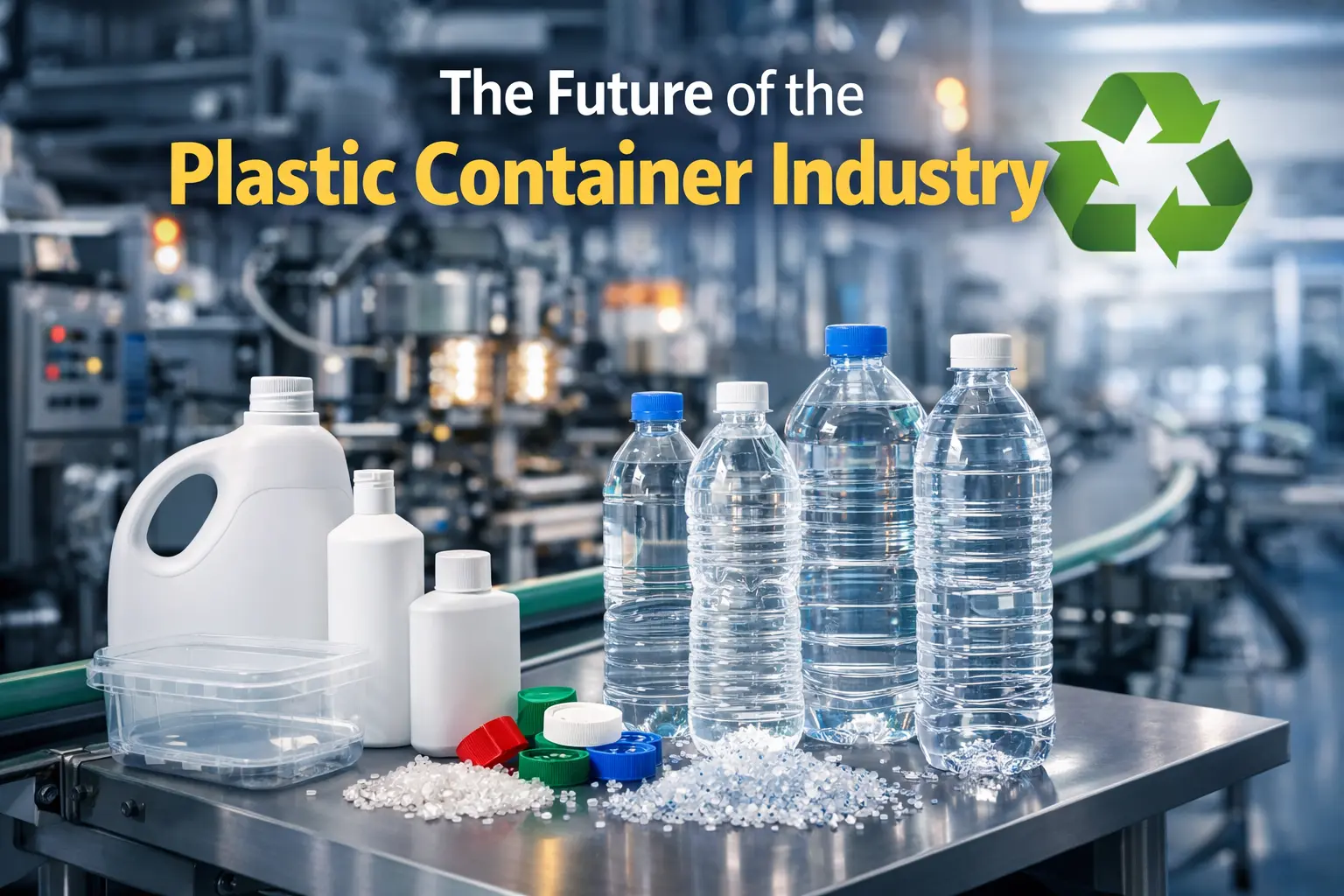
Plastic container industry development is entering a decisive phase marked by higher purity standards, advanced manufacturing technologies, and stronger economic justification than ever before. Despite shifting public narratives around packaging materials, the plastic container industry—particularly plastic containers and PET bottles—continues to demonstrate unmatched efficiency, scalability, and performance across global markets. As demand for safe, affordable, and reliable packaging grows, plastics remain a cornerstone of modern supply chains.
At the heart of the plastic container industry’s success is its ability to consistently deliver high-quality packaging at competitive prices. Plastic containers combine material efficiency, design flexibility, and industrial scalability in ways that alternative materials struggle to replicate. With continuous investment in polymer science, process optimization, and recycling infrastructure, plastic manufacturers are reinforcing their role as essential contributors to global packaging solutions.
PET Bottles and Material Purity
PET (polyethylene terephthalate) bottles represent one of the most technically refined products within the plastic container industry. PET is valued for its exceptional clarity, chemical stability, and strength-to-weight ratio, making it ideal for food, beverage, pharmaceutical, and personal care packaging. Modern PET resins are produced under highly controlled conditions, ensuring low contamination levels and compliance with strict international food-contact regulations.
Advances in intrinsic viscosity (IV) control, melt filtration, and drying systems allow manufacturers to achieve consistent polymer chains and predictable mechanical performance. This translates into bottles with superior impact resistance, reliable sealing properties, and extended shelf life. From a purity standpoint, PET bottles offer a hygienic, non-reactive packaging solution that protects product integrity while meeting the highest safety standards.
Manufacturing Efficiency and Cost Advantages
One of the strongest arguments in favor of the plastic container industry is its economic efficiency. Plastic containers are lightweight by design, which dramatically reduces transportation costs, fuel consumption, and handling expenses compared to heavier materials such as glass or metal. These savings accumulate across supply chains, benefiting manufacturers, brand owners, retailers, and consumers alike.
High-speed injection molding and stretch blow-molding technologies enable the mass production of PET bottles with minimal material waste and tight dimensional tolerances. Automation, real-time quality monitoring, and energy-efficient equipment have further improved productivity while stabilizing operating costs. As a result, the plastic container industry is uniquely positioned to offer predictable pricing even during periods of economic volatility.
In addition, plastics require less energy per unit to manufacture and transport when evaluated across their full lifecycle. This efficiency supports both cost competitiveness and environmental performance, reinforcing plastics as a rational choice for large-scale packaging applications.
Design Flexibility and Performance Engineering
The plastic container industry benefits from an unmatched level of design freedom. Plastic containers can be engineered with precise wall thickness, customized geometries, and application-specific performance features. Lightweighting initiatives have significantly reduced material usage without compromising strength or functionality, demonstrating how innovation continues to improve both cost and sustainability outcomes.
PET bottles can also incorporate multilayer structures, enhanced barrier coatings, and functional closures such as tethered caps. These features support regulatory compliance, brand differentiation, and consumer convenience while maintaining production efficiency. Unlike alternative materials that often require complete redesigns or infrastructure changes, plastics allow rapid adaptation within existing manufacturing systems.
Recycling, Circularity, and Sustainable Progress
Recycling innovation is reshaping the future of the plastic container industry. Mechanical recycling technologies have advanced to the point where high-quality recycled PET (rPET) can be used in food-grade applications without sacrificing clarity, strength, or safety. Improved sorting systems, advanced washing processes, and melt-phase decontamination have elevated recycled plastics to near-virgin quality levels.
Chemical recycling technologies are also gaining momentum, enabling plastics to be broken down into their original monomers and re-polymerized. These processes expand recycling capabilities beyond traditional limits and support the long-term circularity of plastic containers. Closed-loop systems are becoming increasingly viable, reinforcing plastics as a renewable material resource rather than a disposable one.
Importantly, these recycling advancements align with economic reality. The plastic container industry can integrate recycled content without excessive cost increases or performance trade-offs—something many alternative materials struggle to achieve at scale.
Economic and Social Justification
From an economic perspective, the plastic container industry supports millions of jobs globally across manufacturing, logistics, recycling, and downstream industries. Plastic packaging enables affordable access to food, beverages, and essential goods, particularly in developing markets where cost sensitivity is high. Eliminating or replacing plastics without viable alternatives risks increasing prices, food waste, and supply chain inefficiencies.
Plastic containers also reduce product loss through superior durability and protection. Lower breakage rates mean fewer damaged goods, less waste, and improved safety during transportation and handling. These benefits are often overlooked in simplified comparisons with other materials but are critical when evaluating real-world performance.
Addressing Challenges with Practical Solutions
It is widely acknowledged that the plastic container industry faces challenges, particularly related to waste management and public perception. However, these issues are not inherent flaws of the material itself but rather challenges of collection systems, infrastructure, and education. Manufacturers are increasingly investing in responsible design, recyclability, and partnerships that improve recovery rates and environmental outcomes.
Compared to alternative packaging materials that may introduce higher energy use, water consumption, or transportation emissions, plastics offer a balanced and transparent performance profile. When managed responsibly, plastic containers provide measurable advantages across cost, efficiency, and lifecycle impact.
The Road Ahead for the Plastic Container Industry
Looking forward, the plastic container industry is poised for continued growth driven by technical refinement, economic necessity, and practical sustainability. Innovations in resin formulation, process automation, digital quality control, and recycling technologies will further enhance the value proposition of plastic containers and PET bottles.
For manufacturers, plastics remain a strategic asset—offering scalability, affordability, and performance that few materials can match. As global demand for safe, lightweight, and cost-effective packaging continues to rise, the plastic container industry will remain an essential pillar of modern manufacturing and commerce.
In an increasingly complex economic and regulatory environment, plastics are not just a viable option—they are a technically proven, economically justified, and continuously improving solution for the future of packaging.



No comment